
On a classed vessel, a valve is not chosen on size and pressure alone: the shipyard, the owner or the classification society often asks for written proof. One of these proofs is the EN 10204 3.2 certificate, signed by an inspector independent of the manufacturer, for example from a classification society: Lloyd's Register, RINA, Bureau Veritas, ABS or DNV (formerly DNV GL). This article explains what the document proves, what it does not, and how to request it before ordering.
What is a 3.2 certificate?
The 3.2 certificate is an inspection document defined by the European standard EN 10204:2004, "Metallic products - Types of inspection documents". It states that a delivered product complies with the order and gives the results of tests carried out on that product or its production batch. What sets it apart: it is validated both by the manufacturer's inspection department and by an inspector who does not belong to the manufacturer.
2.2, 3.1 or 3.2: what is the difference?
The standard defines four types of document. The first two are issued by the manufacturer alone, without testing of the delivered products; the last two give results of "specific" inspection, meaning tests carried out on the delivered products themselves rather than on comparable production.
| Type | Content | Validated by |
|---|---|---|
| 2.1 | Declaration of compliance with the order, without test results | The manufacturer |
| 2.2 | Test report: compliance and results of non-specific inspection | The manufacturer |
| 3.1 | Inspection certificate: results of specific inspection, on the products supplied | The manufacturer's authorised inspection representative, independent of production |
| 3.2 | Inspection certificate: the same specific test results | The manufacturer's inspection and an external inspector: the purchaser's representative or the inspector designated by official regulations |
The 3.1 and 3.2 therefore contain the same kind of results: the difference lies in the signature. The 3.1 is validated within the company, by an inspection department independent of production, with no outside body. The 3.2 adds the endorsement of an external inspector. A 2.2 test report replaces neither. And if your specification still mentions "3.1.B": that is the old name, replaced by the 3.1 in the 2004 edition, which also merged the former 3.1.A, 3.1.C and 3.2 report into the single type 3.2.
See our 3.1 certificate and 3.2 certificate pages.
Type approval or 3.2 certificate: which one do you need?
They are two different proofs, and one does not replace the other.
- Type approval covers a model. The classification society reviews the drawings and documentation, has tests carried out on representative samples, then issues a certificate valid for series production of that model until its expiry date. DNV sums it up: type approval verifies the design, product certification verifies the product delivered.
- The 3.2 certificate covers a delivered batch: it proves that those particular parts were inspected, with measured test results and the inspector's signature.
A type approval therefore does not by itself prove that a batch was inspected, and a 3.2 is not a type approval of the model. For equipment intended for a classed vessel, the society may require one, the other or both: your specification or the vessel's classification society will say which. See our type approval page.
What does the classification society inspector do?
ABS describes on its website the steps its surveyors follow to verify material for a 3.2 certificate, including material already supplied with a 3.1 certificate:
- they visit the material handler to identify and examine the material;
- they carry out visual and dimensional checks;
- they trace the material back to the ladle chemical analysis, often using the 3.1 certificate;
- they witness the additional metallurgical tests required by the specification;
- they check that the documents meet the product specification and the customer's purchase order.
The key point: the inspector must be able to witness or verify the tests. A 3.2 is therefore planned before manufacture or delivery. The marking on the parts (heat, batch) must refer to the certificate.
Lloyd's Register, RINA, Bureau Veritas, ABS, DNV: who are they?
These five classification societies are members of IACS, the International Association of Classification Societies. All of them set rules for ship design and construction, verify their application and certify materials and equipment for use on board.
- Lloyd's Register (LR): British society founded in London in 1760. Its type approval certificates can be searched in the LR Approvals online tool.
- RINA: descended from the Registro Italiano Navale, founded in Genoa in 1861. For RINA, type approval approves a product's design (drawing review, prototype testing); its certificates are generally valid for five years and appear on a public list.
- Bureau Veritas (BV): French society, founded in Antwerp in 1828. It distinguishes type approval certificates, which replace case-by-case design assessment, from product certificates, which prove that an item has been inspected and tested; its Approval Explorer tool lists type-approved manufacturers.
- ABS: the American Bureau of Shipping, an American society whose origins go back to 1862. It offers material verification leading to a 3.2 certificate.
- DNV: society of Norwegian origin founded in 1864. It was called DNV GL from 2013 to 1 March 2021 following its merger with Germanischer Lloyd: "DNV GL" and "DNVGL" refer to the same society. Its current approvals can be checked in the Approval Finder database.
The right society is the one that classes the vessel, or the one named in your specification: an approval or a 3.2 from another society will not necessarily be accepted.
Which certified valves are in the catalogue?
On our product pages, the "Certificate" line gives the document associated with the variant shown. It can change from one size to another: check the exact reference. Here are some examples, grouped by what the product page states.
Lloyd's Register 3.2 certificate
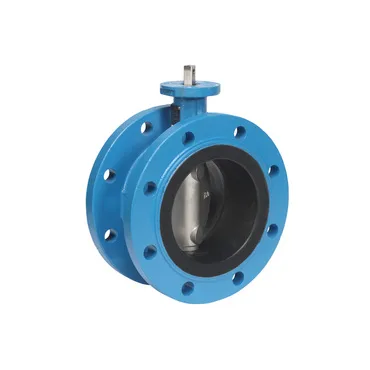
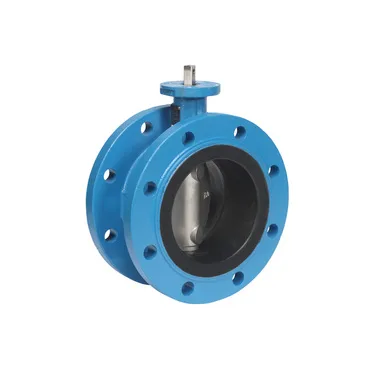
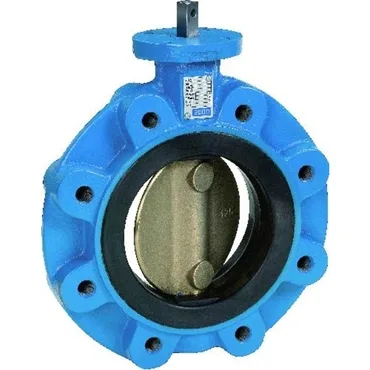
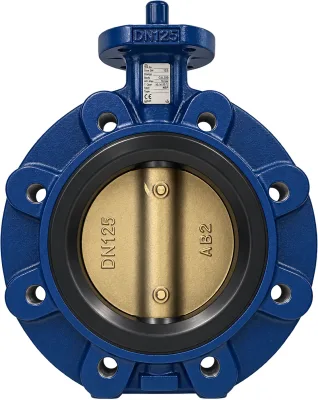
Butterfly valves whose product page states "Lloyd's / 3.2", in aluminium bronze or 316 stainless steel (Lloyd's certificate page):
RINA 3.2 certificate
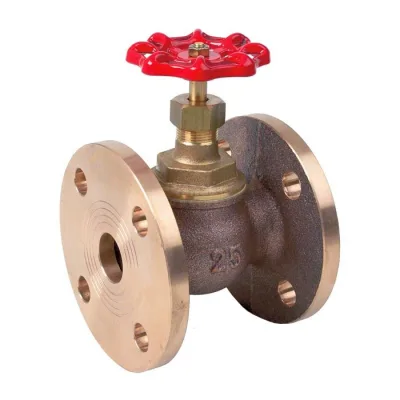
Flanged bronze valves whose product page states "RINA / 3.2" (RINA certificate page):
Other 3.2 certified items
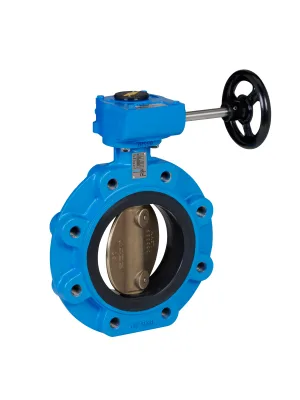
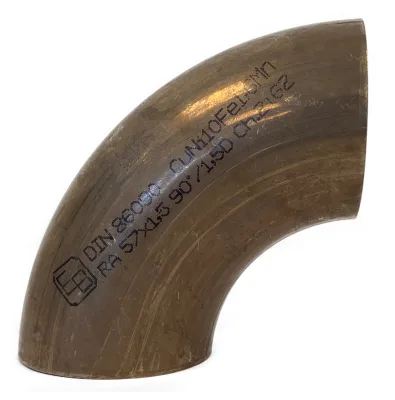
The product page states "3.2" without naming a society for this Eriks butterfly valve, featured in our article on Eriks 3.2 certified valves, and for some variants of our weld-on copper-nickel fittings (3.2 certificate page):
Bureau Veritas, DNV, ABS
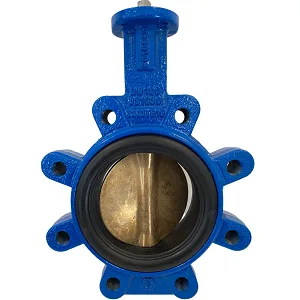
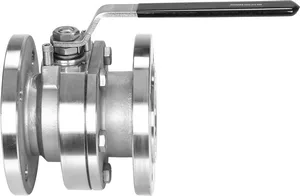
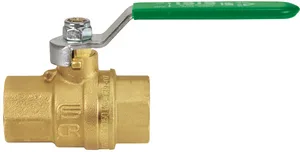
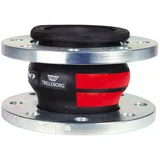
For these items, the product page names the society without stating whether it is a type approval or a batch certificate: ask us for the exact document before ordering. Valves listed as Bureau Veritas, a DZR brass ball valve listed as DNV, and a flanged expansion joint listed as ABS, Bureau Veritas and DNV:
Lloyd's type approval
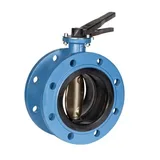
Finally, butterfly valves whose product page states "Lloyd's / Type approval": the model is approved, which does not replace a 3.2 if your project requires one.
On choosing a valve material for seawater (bronze, DZR brass, stainless steel, copper-nickel), see our article Bronze, brass, stainless steel, aluminium.
How do you order a valve with a 3.2 certificate?
The certificate is requested before ordering: once the part has been delivered, the inspector can no longer witness the original tests. Tell us:
- the type of document required: 3.1 or 3.2;
- for a 3.2, who must sign: the vessel's classification society (Lloyd's Register, RINA, Bureau Veritas, ABS, DNV...) or the purchaser's inspector;
- the material standard and the tests required: a test that is not requested does not appear on the certificate;
- whether a type approval is also required: the society and, if possible, the certificate number, to be checked in its online register;
- the reference, size and quantity.
A statement on a product page does not replace the document: we confirm with you, before ordering, which certificate will be supplied and from which society. If the reference is already available, we check with you that its certificate meets your project's needs. For a valve or a society not in the catalogue, contact us to discuss it.
RPM Diffusion is an official distributor of Eriks, several of whose valves are offered with a 3.2 certificate.
Frequently asked questions
Is the 3.1 certificate issued by an independent body?
No. The 3.1 is validated by the manufacturer's inspection department, independent of production. It is the signature of an inspector independent of the manufacturer that makes it a 3.2.
Does a 3.2 certificate replace a type approval?
No. The 3.2 certifies tests on a delivered batch; type approval certifies that a model's design meets the society's rules. The specification or the vessel's classification society says which is required, sometimes both.
Can a 3.2 be obtained after delivery?
As a rule, a 3.2 is planned at the ordering stage, because the inspector must be able to witness or verify the tests. For material already supplied with a 3.1 certificate, ABS states that it can issue an "intent of" 3.2 certificate after verification by its surveyors and additional testing. If the part has already been delivered, talk to us before taking any steps.
Are DNV GL and DNV the same society?
Yes. DNV GL took back the name DNV on 1 March 2021. An earlier certificate or product name may still read "DNV GL" or "DNVGL".
What does "3.2 LR" or "3.2 RINA" mean in a product name?
The name states the society whose inspector endorses the 3.2 certificate: Lloyd's Register for LR, RINA for RINA. Check that it matches the society that classes your vessel.
Find out more
See our 3.2 certificate and type approval pages and our article on Eriks 3.2 certified valves. For a 3.2 certificate before an order, call us on +33 4 22 32 91 88 or email contact@rpmdiffusion.com.