
An aquatherm system is mainly joined by fusion, without adhesive: pipes and fittings are heated, then pushed together, and the two parts become one. That is the principle of aquatherm systems, a German manufacturer of PP-R and PP-RCT pipes and fittings used in buildings, industry and on board ships. RPM Diffusion is an official distributor. This article covers the ranges, how to choose between them, fusion welding and tooling, based on the manufacturer's website and our product pages.
What is an aquatherm system?
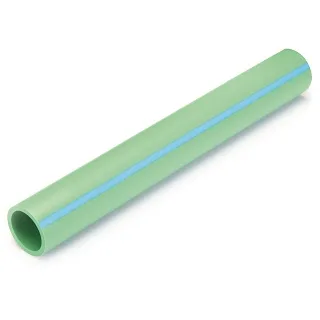
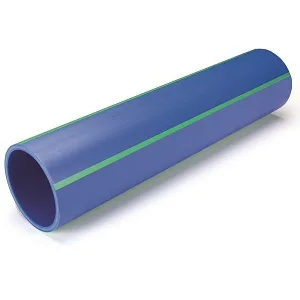
It is a complete polypropylene system: pipes, fusion fittings, valves, transition fittings to metal and welding tools, designed to be assembled together. aquatherm calls its polypropylene fusiolen, which it says is well known for its welding properties. The green range is PP-R; the blue range is PP-RCT, which the manufacturer describes as highly resistant to temperature and pressure.
Which aquatherm ranges are there?
The manufacturer organises its offer by colour, each matching a use:
| Range | Material | Main uses according to aquatherm |
|---|---|---|
| aquatherm green | PP-R | Drinking water, hot and cold water; on board: drinking and hot water, ballast water |
| aquatherm blue | PP-RCT (fusiolen) | Heating and cooling circuits, industrial cooling water; on board: HVAC and cooling water (including seawater), ballast, waste water, engine room and utility lines |
| aquatherm red | fusiolen PP-R FS | Sprinkler systems and wall hydrants, not for drinking water |
| aquatherm black | fusiolen PP-R | Radiant heating and cooling in ceilings, walls and floors |
| aquatherm energy | pre-insulated pipe (PUR foam) | Heating and cooling networks |
Our online catalogue covers the green and blue ranges, their fittings, valves and tooling. The red, black and energy ranges are not in it: contact us to discuss them.
Green pipe or blue pipe: which should you choose?
The answer depends first on the fluid. aquatherm green is the range for water intended for consumption: it is plasticiser-free, odourless, tasteless and free of heavy metals, and the manufacturer cites drinking-water certifications in many countries (DVGW, SKZ and HIG in Germany, WRAS in the UK, ÖVGW in Austria, AENOR in Spain, among others). aquatherm blue is the range for technical circuits: heating, chilled water, process cooling or data centre cooling.
Next comes the pipe construction:
- S: single-layer pipe, recommended by the manufacturer for cold water up to 25 °C.
- MF: multilayer pipe with fibre reinforcement in the middle layer. According to aquatherm, its linear expansion is 75% lower than conventional polypropylene and its thinner walls allow 20% more flow at the same pressure.
- MF RP: fibre-reinforced composite pipe with enhanced pressure resistance, from Ø32 to Ø315 (green) or Ø630 (blue).
- UV: outer polyethylene layer protecting against ultraviolet light for outdoor installation.
- OT (blue range): oxygen barrier to DIN 4726.
What does SDR mean on a PP-R pipe?
SDR is the ratio between the outside diameter and the wall thickness. The lower it is, the thicker the wall and the higher the pressure the pipe can take. A 20 mm pipe in SDR 11 has a 1.9 mm wall; in SDR 7.4, a 2.8 mm wall. aquatherm offers SDR 6 to SDR 17.6 depending on range and diameter. The permissible pressure also depends on temperature and service life: to size a system, refer to the manufacturer's tables or ask us.
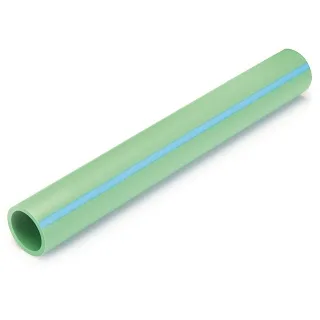
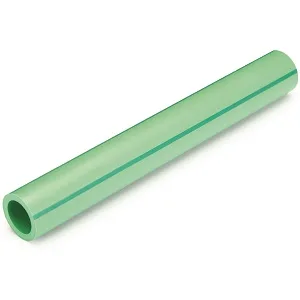
Our pipes, supplied in lengths, with their sizes listed on each product page:
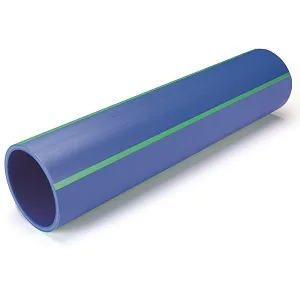
See all our PP-R pipes.
Why polypropylene on board a ship?
On its maritime page, aquatherm puts forward four arguments:
- Weight: polypropylene has a density of 980 kg/m³, against 7,800 kg/m³ for steel, which makes handling easier and, according to the manufacturer, contributes to fuel savings.
- Corrosion: polypropylene does not rust; the manufacturer states no incrustation, no corrosion-related leaks and no protective coating to maintain, and a service life of up to 100 years, including in saltwater environments.
- Insulation: with a thermal conductivity of 0.15 W/mK, the pipe reduces insulation needs and the risk of condensation compared with metal pipe.
- Jointing: welding gives a homogeneous joint, ready for operation as soon as the weld is complete.
The manufacturer gives an operating range of -40 °C to +90 °C for these applications, and PN 10 flanges and, on request, PN 16, in a seawater-resistant design with EPDM seals. On choosing materials for a seawater circuit, see also our article Bronze, brass, stainless steel, aluminium.
On approvals, aquatherm points out that the classification societies (DNV, Bureau Veritas, Lloyd's Register, RINA, ABS, CCS, Korean Register) determine which piping is accepted, depending on the medium, the pressure and the ship type. Before ordering for a classed ship, check which approval is required: we can help you obtain the manufacturer's documents.
How is fusion welding done?
The pipe and the fitting are heated at the same time on a heating-element tool fitted with bushes of the right diameter, then pushed together: the material merges into a homogeneous joint, with no adhesive or sealant. aquatherm follows the DVS 2207 part 11 guidelines and offers several techniques depending on diameter:
- manual socket fusion, from 16 to 63 mm (green range);
- machine socket fusion, from 50 to 125 mm;
- butt fusion, for large diameters from 160 mm;
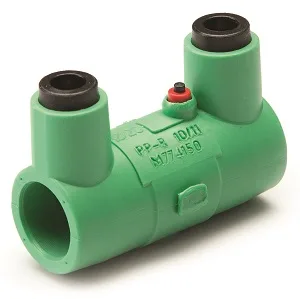
- electrofusion socket, from 20 to 250 mm, handy in hard-to-reach places;
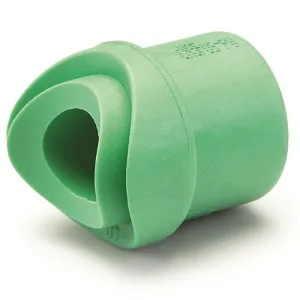
- weld-in saddle fused onto the drilled pipe to create a branch, including on an existing system.
The times published by aquatherm for the green range, in small diameters:
| Outside diameter (mm) | Heating time DVS (s) | Heating time below +5 °C (s) | Processing time (s) | Cooling time (min) | Welding depth (mm) |
|---|---|---|---|---|---|
| 20 | 5 | 8 | 4 | 2 | 14.5 |
| 25 | 7 | 11 | 4 | 2 | 16.0 |
| 32 | 8 | 12 | 6 | 4 | 18.0 |
| 40 | 12 | 18 | 6 | 4 | 20.5 |
The second heating column gives the times the manufacturer recommends when the ambient temperature is below +5 °C. These values are given as examples: always follow your tool's instructions and aquatherm's current parameters for the range used.
Our fusion fittings, from Ø20 to Ø125 for most of them:
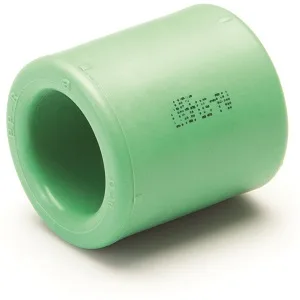
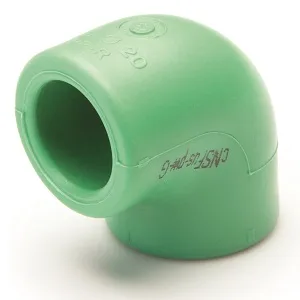
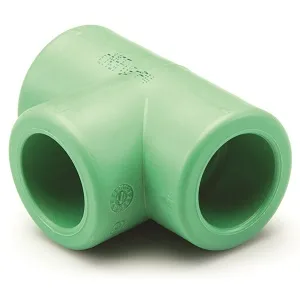
How do you connect a PP-R system to metal?
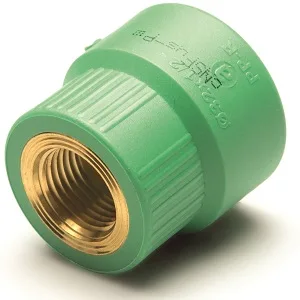
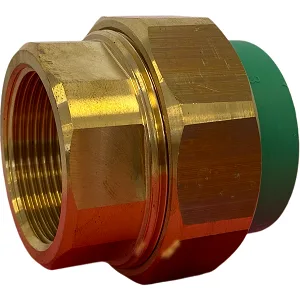
With transition fittings: one end is fused onto the pipe, the other has a male or female thread, or a detachable union. This is how an aquatherm system is connected to a pump, an appliance or existing metal pipework. Fusion valves complete the system.
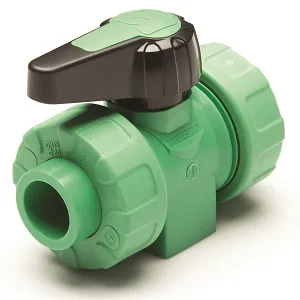
See all our PP-R fittings and PP-R valves.
Which tools do you need to weld PP-R?
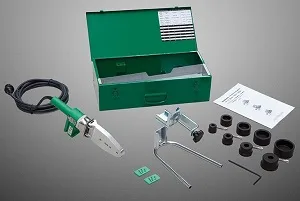
You need something to cut the pipe square, a welding tool with its bushes and, for saddle branches, a drill bit matching the diameter. The aquatherm basic kit brings together the tool and its accessories for diameters from 20 to 63 mm.
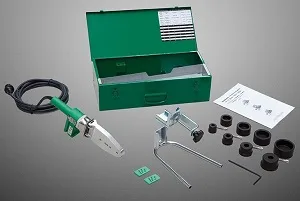
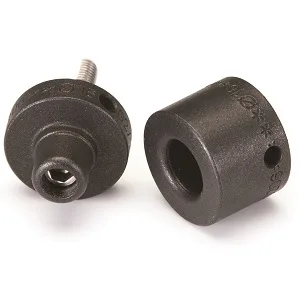
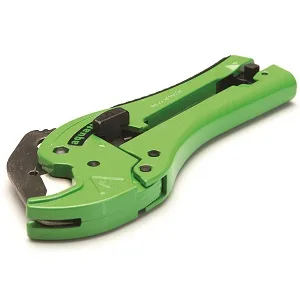
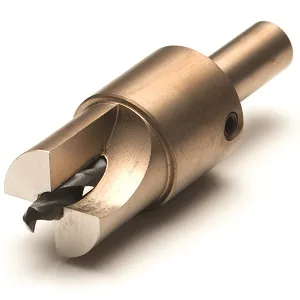
See all our PP-R tools, including welding machines.
Safety: the heating element and bushes are very hot during and after welding; follow the tool's instructions. If the system connects to a seawater intake, any work on the seacock must be done with the boat out of the water or with the intakes closed from outside.
Frequently asked questions
What is the difference between PP-R and PP-RCT?
aquatherm uses PP-R for the green range (domestic water) and PP-RCT for the blue range (technical circuits), which it describes as highly resistant to temperature and pressure.
Can aquatherm green pipe be used for drinking water?
Yes: that is what it is made for. It is free of plasticisers and heavy metals, and the manufacturer cites drinking-water certifications such as DVGW, WRAS, ÖVGW and AENOR. The red range, by contrast, is not for drinking water.
Is aquatherm PP-R suitable for seawater?
According to aquatherm, the blue range is used on board for HVAC and cooling circuits carrying water, water-glycol or seawater, and the blue and green ranges for ballast water. The approval required depends on the ship's classification society.
How long should a 20 mm pipe be heated?
For the green range, aquatherm gives a 5-second heating time to DVS (8 seconds below +5 °C), 4 seconds to join, 2 minutes of cooling and a 14.5 mm welding depth. Follow the current instructions.
How do you add a branch to a pipe already installed?
With a weld-in saddle: drill the pipe with the matching bit, then fuse the saddle onto the opening. aquatherm presents it as a solution that saves material and time, including in renovation work.
Find out more
Browse all aquatherm products at RPM Diffusion and the manufacturer's website: maritime applications, aquatherm green and aquatherm blue. To choose a range, an SDR or a tool, or to ask about a product not in the catalogue, call us on +33 4 22 32 91 88 or email contact@rpmdiffusion.com.