
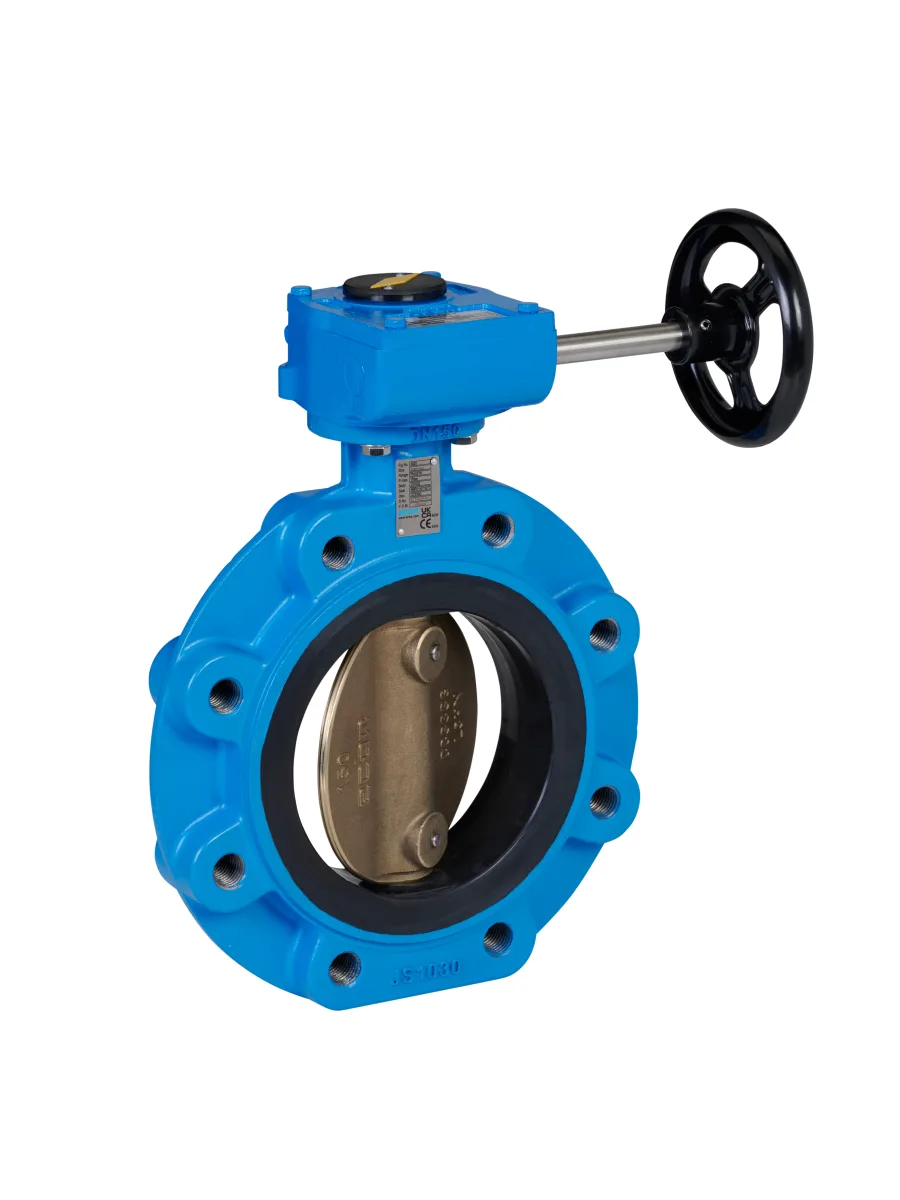
At RPM Diffusion, two valve families carry the Eriks brand: the RPM5823 lug-type butterfly valve with gearbox, from DN200 to DN400, whose six variants show a 3.2 certificate on their product sheet, and the RPM275 flanged bronze globe valve (ECON® type 275), in DN25 and DN40, whose sheet does not mention a certificate. This article introduces the manufacturer, describes each family from our product sheets and the data sheet published on our site, then explains what a 3.2 certificate guarantees and how to request one. RPM Diffusion is an official Eriks distributor.
Who is Eriks?
Eriks was founded in the Netherlands, in 1940 in Alkmaar, by Arie Eriks, who at the time sold valves and gaskets to dairy farmers. Today it describes itself as a specialist in industrial components, in particular sealing, gaskets, valves and hoses, with more than 85 years of experience, more than 3,000 specialists worldwide and more than 500,000 products. Econosto, a company founded in Delft in 1892, has since joined the group.
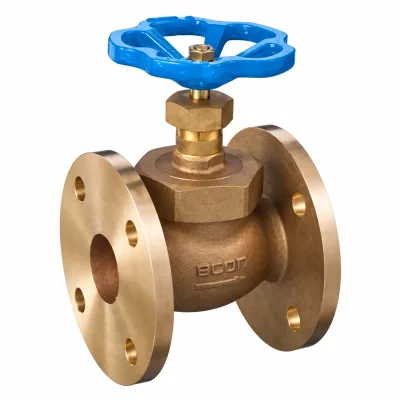
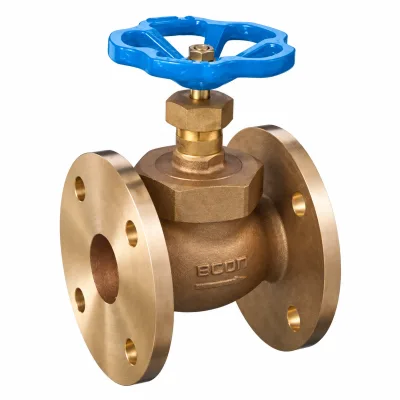
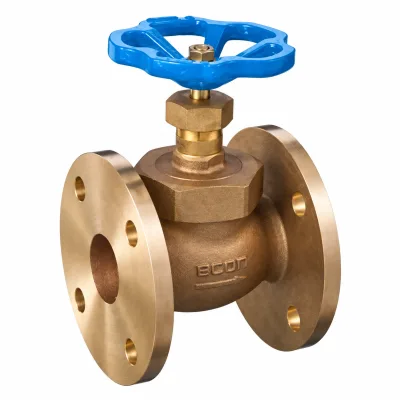
Eriks also develops its own brands. ECON® is one of them: it is the name cast into the bronze body of the RPM275 globe valve, and the brand given on its data sheet.
What does a 3.2 certificate guarantee?
The 3.2 certificate is an inspection document under the European standard EN 10204:2004. It gives the results of tests carried out on the products supplied, or on their lot. What sets it apart: it is prepared jointly by the manufacturer's inspection representative, independent of manufacturing, and by an outside inspector, either the purchaser's authorised representative or the inspector designated by the regulations. In shipbuilding, this inspector may be a classification society surveyor: Lloyd's Register, RINA, Bureau Veritas, DNV or ABS.
- 3.1: validated by the manufacturer's own inspection only, with no outside body.
- 3.2: the same type of results, also endorsed by an outside inspector, who must be able to witness or review the tests.
- Type approval: recognises the design of a model; it does not prove that a delivered lot has been inspected, and a lot certificate does not replace it.
Our 3.2 certificate page explains these terms in detail, and our article 3.2 certified valves and classification societies compares the classification societies.
Eriks RPM5823 butterfly valve: what are its characteristics?
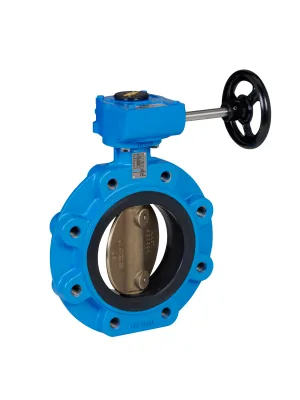
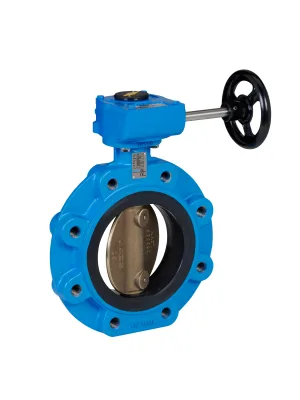
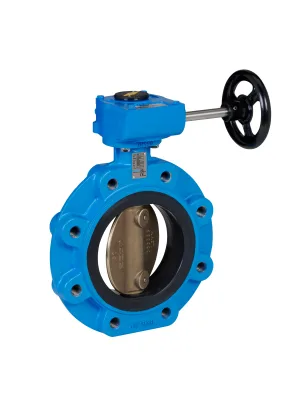
The RPM5823 is a lug-type butterfly valve: its tapped lugs (female thread) take the bolts of the pipework flanges. It is operated by a handwheel gearbox. According to our product sheets, its six variants share:
- an NBR sealing liner;
- lug connection, female thread;
- the 3.2 certificate entry on the "Certificate" line.
The pressure rating is PN16, except for the DN300 RPM5823-13, which is PN10; the RPM5823-14 covers the same DN300 in PN16.
| Reference | Size | Pressure | Certificate (product sheet) |
|---|---|---|---|
| RPM5823-10 | DN200 - 8" | PN16 | 3.2 |
| RPM5823-12 | DN250 - 10" | PN16 | 3.2 |
| RPM5823-13 | DN300 - 12" | PN10 | 3.2 |
| RPM5823-14 | DN300 - 12" | PN16 | 3.2 |
| RPM5823-16 | DN350 - 14" | PN16 | 3.2 |
| RPM5823-18 | DN400 - 16" | PN16 | 3.2 |
If your specification requires a material for the body, disc or stem, ask us for the details of the reference before ordering. On materials for a seawater circuit (bronze, brass, stainless steel, aluminium), see also our article Choosing materials for a seawater circuit.
Eriks ECON 275 globe valve: what is it used for?
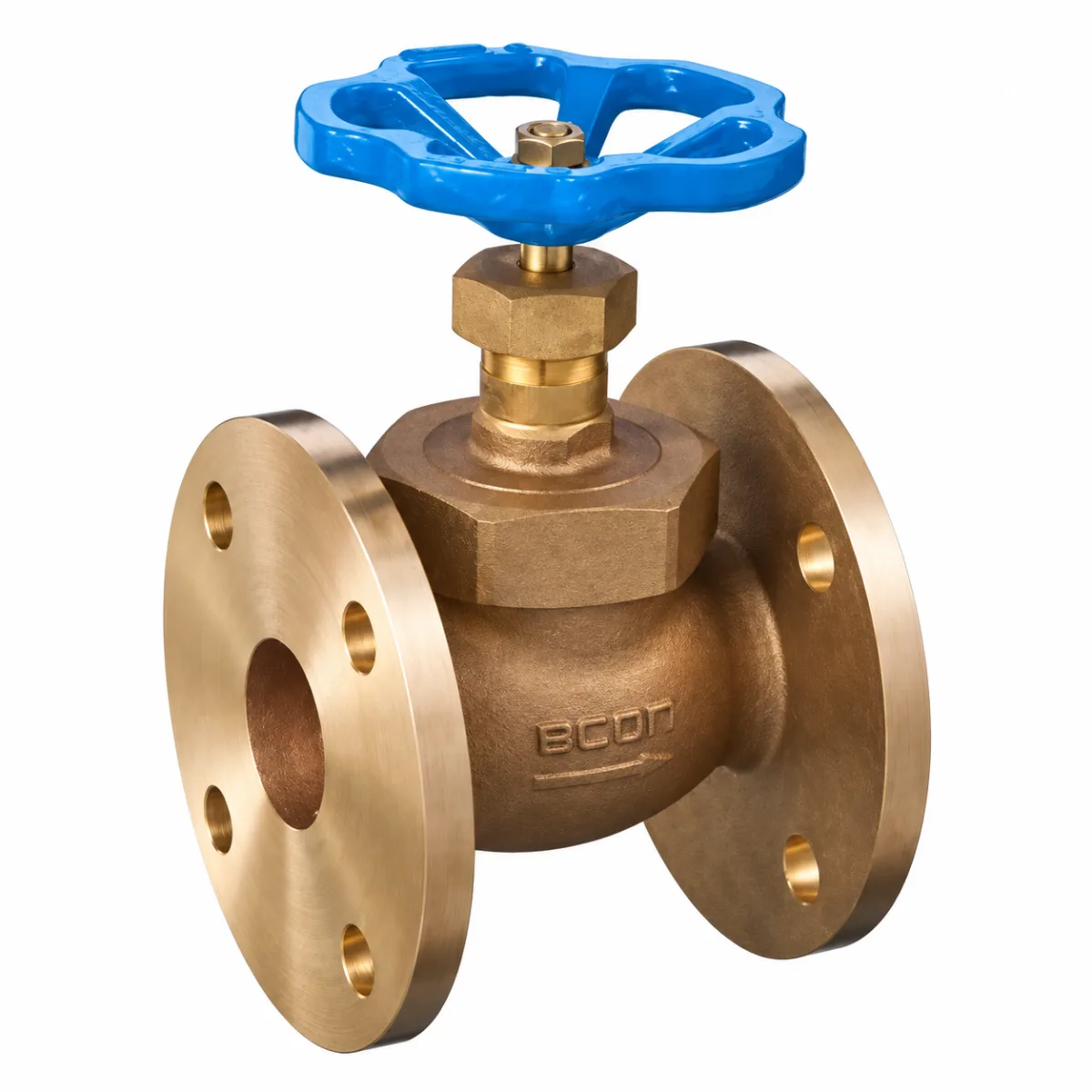
The RPM275 is a straight-pattern bronze globe stop valve, with bronze-on-bronze sealing and flanged connections. We offer it in three variants: DN25 with fixed disc, DN40 with fixed disc and DN40 SDNR, with a loose disc (screw-down non-return). The data sheet published on our site, drawn up for the DN40 fixed-disc version, lists as applications general industry, on board ships, neutral liquids and gases, hot or cold water and oil; for thermal oil, it recommends a bellows-sealed valve.
| Characteristic | Value (data sheet, DN40 fixed disc) |
|---|---|
| Body, disc, bonnet | Bronze CC491K (RG5) |
| Stem | CuZn35Ni (SoMs59) |
| Seat sealing | Bronze |
| Stem sealing | Stuffing box, graphite packing |
| Bonnet gasket | PTFE |
| Handwheel | Cast iron, rising rotating stem |
| Connection | Flanges, flat face, EN (DIN) standard |
| Service temperature | -10 °C to +200 °C |
| Max. pressure (DN15 to DN50) | 25 bar at 120 °C; 12 bar at 200 °C |
| Kv value (DN40) | 39.5 m³/h |
| Testing | EN 12266-1 |
Our product sheets state PN25; the designation reads PN16/25. According to the data sheet, the valve has a screwed bonnet with locking nut. Its options include a BSP threaded version, type 1275, and inspection and certification by the main classification societies. The RPM275 product sheets currently show no certificate: if you need a 3.2 or a classification society certificate for this valve, or the threaded 1275 version, which is not in the catalogue, contact us before ordering. Details are in the data sheet (PDF, in French) linked from each RPM275 product page.
How do you order an Eriks valve with its 3.2 certificate?
- Start from your specification, or from the ship's classification society: it decides which document is required.
- Check the "Certificate" line of the chosen variant: the entry can vary from one reference to another.
- Specify 3.1 or 3.2 and, for a 3.2, which society or inspector must endorse it. A former 3.1.B corresponds to the 3.1.
- Ask before ordering: for a 3.2, the inspector must be able to witness or review the tests. If the reference is already available, confirm with us that its certificate meets your project requirements.
- Keep the certificate with the ship's or installation's records: it relates to the lot delivered.
An entry on a product sheet does not replace the document: we confirm, before the order, which certificate will be supplied.
Other 3.2 certified products in the catalogue
Beyond Eriks, the 3.2 certificate page groups the products whose sheet shows this certificate: aluminium bronze or stainless steel butterfly valves, bronze globe valves, a wafer ball valve and 90/10 copper-nickel weld fittings. Some designations name the society, for example "3.2 LR" or "3.2 RINA". See also all our lug butterfly valves and straight globe valves.
Safety: on a circuit connected to the sea, all work on a valve must be done with the boat out of the water or the seawater intake closed. If water gets in during the work, the boat can flood.
Frequently asked questions
Are the Eriks RPM5823 butterfly valves 3.2 certified?
Yes: the product sheet of each of the six variants, from DN200 to DN400, shows the 3.2 certificate. Before ordering, confirm with us the document supplied and, if needed, the society that must endorse it.
What is the difference between a 3.1 and a 3.2 certificate?
Both give test results on the products supplied, under EN 10204:2004. The 3.1 is validated by the manufacturer's own inspection only; the 3.2 is prepared with an outside inspector, the purchaser's representative or a designated inspector, for example a classification society surveyor.
Is a 3.2 certificate the same as type approval?
No. The 3.2 confirms the conformity of a delivered lot; type approval recognises the design of a model. One does not replace the other.
Can the ECON 275 globe valve be supplied with a certificate?
Its data sheet lists inspection and certification by the main classification societies as an option. Our RPM275 product sheets show no certificate: contact us before ordering to discuss it.
Up to what temperature can the ECON 275 globe valve be used?
According to its data sheet, from -10 °C to +200 °C. From DN15 to DN50, the maximum pressure is 25 bar at 120 °C and 12 bar at 200 °C. For thermal oil, the data sheet recommends a bellows-sealed valve.
Find out more
See our 3.2 certificate page and our article on 3.2 certified valves, and the manufacturer's own presentation (About ERIKS, History of ERIKS). For an Eriks valve, a certificate or a version not in the catalogue, call us on +33 4 22 32 91 88 or email contact@rpmdiffusion.com.