
The seawater intake is fitted in a hole through the hull. It lets in the water that feeds the engine, generators, watermaker or heads, and it is the first stage of filtration, and of protection, for the whole circuit. Choosing it matters more than it seems. Guidi offers a complete range in bronze, brass or aluminium, with slotted or perforated grilles depending on the water the boat sails in. Here is how to find your way, based on the manufacturer's documentation.
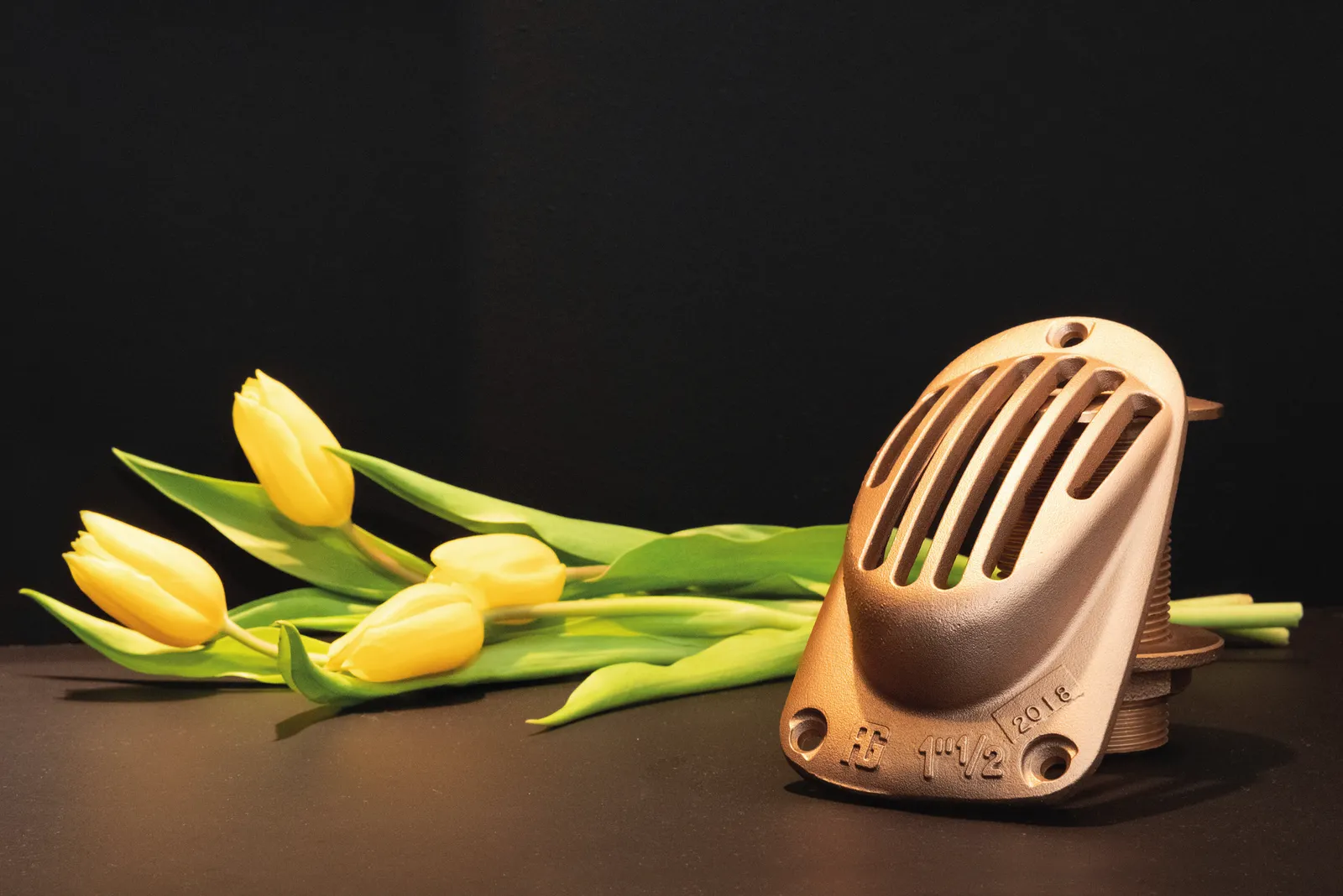
Intake or scoop strainer: what's the difference?
A seawater intake (in Italian presa a mare) is a one-piece part: a grille head on the outside and a threaded body that passes through the hull and is clamped inside with a nut and washer. A scoop strainer (cuffia) is a grille head: the older form of the intake. Only the Manta scoop (1261, 3261) is fixed to the hull and removable, with a separate through-hull (1260, 1260A). On our website, the “2000” series intakes are listed as through-hulls. All these parts are for marine use only.
Bronze, brass or aluminium?
- Bronze: the best material against corrosion. Guidi advises building the whole circuit in bronze (intake, valve, fittings, outlets) without mixing materials.
- Brass (sandblasted at Guidi): suitable for environments with less corrosion risk, or well protected against galvanic currents.
- Aluminium: for special installations where lightness matters; materials must then not be mixed.
For more on this topic, see our article Bronze, brass, stainless steel, aluminium: choosing materials.
A patented shape to reduce head loss
The shape of Guidi intakes was patented in 1995 and has been refined over the years. Their internal hydrodynamics reduce head loss, turbulence and air bubbles. Above all, the flow area through the head is much larger than the bore of the threaded body: the intake is full bore and does not need to be oversized. Guidi recommends pairing it with its strainer and anti-blocking valves, as the complete circuit is designed to reduce head loss and prevent air and cavitation.
Cavitation comes from vapour pockets that form when pressure drops locally; as they collapse, they produce very high-pressure micro-jets that are noisy, reduce efficiency and pit the metal. According to Guidi, this damage and breakage also affect plastic intakes.
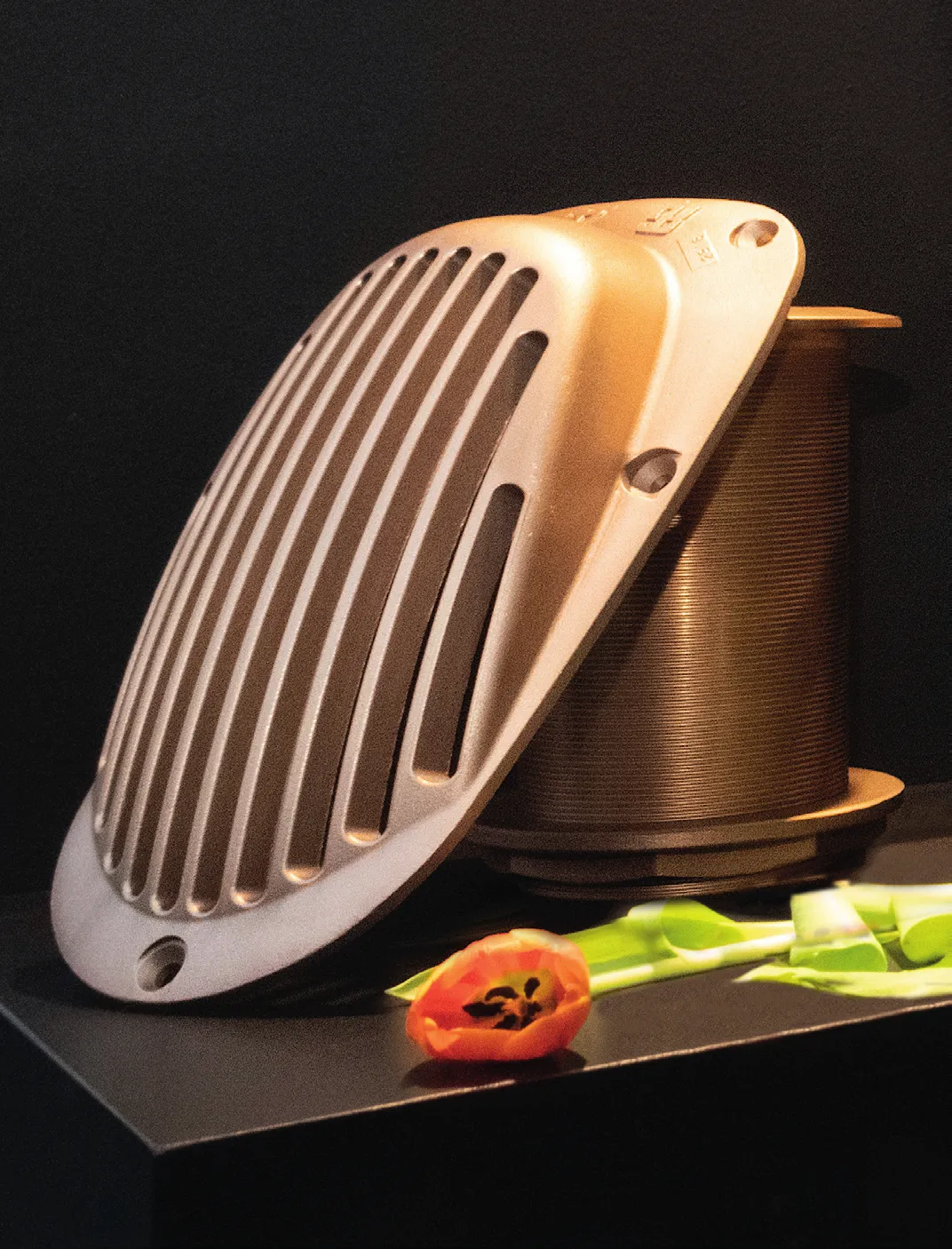
Which model for which use?
“2000” series: everyday use
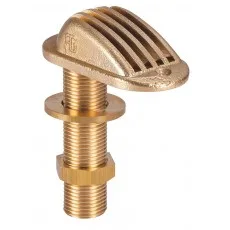
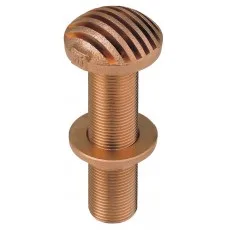
According to Guidi, the 1112, 1114 and 1120 intakes suit the most common uses and any boat without special requirements. The 1112B is the bronze equivalent of the 1112 (“2000” series).
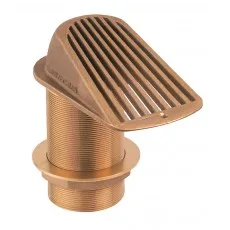 RPM1112B-2004
Through-hull series "2000" bronze DN15 - 1/2" PN16
“2000” series bronze intake (1112B)
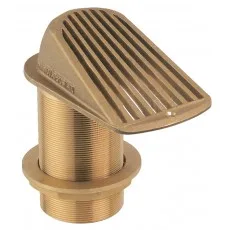
“2000 export” series: more flow, clean seas
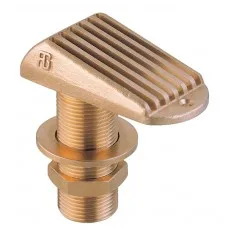
The patented 1113 (brass) and 1113B (bronze) models were developed at the request of Nordic customers who wanted fewer slats; the 1113B has the widest grille in the range. These models suit clean seas, such as northern waters, or circuits that need more flow.
“Manta” scoop and separate through-hull: the easiest to clean
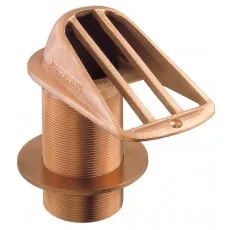
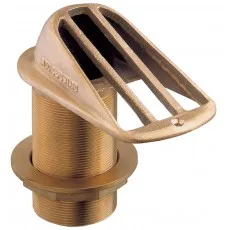
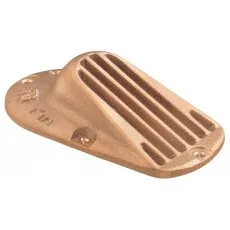
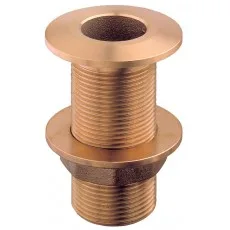
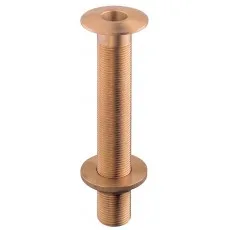
The patented “Manta” series 1261 scoop strainer is fixed to the hull, so it can be removed and cleaned. Its separate 1260 through-hull, also patented, gives direct access to the inside of the circuit for cleaning and maintenance. The same applies to the long-body “L” series 1260A through-hull, suited to thick timber planking or installations that need a longer body. Guidi also makes the Manta scoop in anodised aluminium (3261) for boats that need lightweight fittings.
Fully slotted grille: for the heads
The fully slotted 1120F intake is generally used for the heads, as it lets water in at lower pressure. The round 1210 intake and all slotted scoops share this feature.
Perforated head: for muddy waters
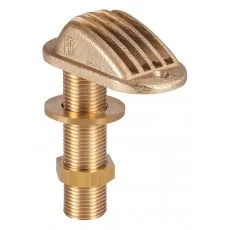
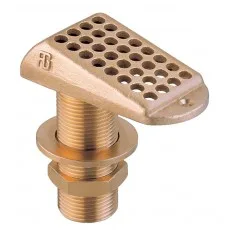
Models with a perforated head, the 1115 intake or the 1117 and 1119 scoops, are better suited to very muddy waters, such as the Po delta.
Classic 1116 to 1119 scoops
Still in the catalogue, the 1116, 1117, 1118 and 1119 scoops are the “old-fashioned” versions of modern intakes: just as carefully made, but less efficient. The round 1116 and 1117 models are designed for fishing and lagoon boats; these scoops also suit vintage boats.
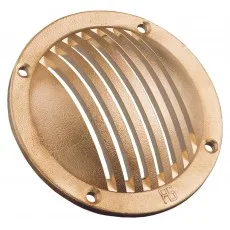
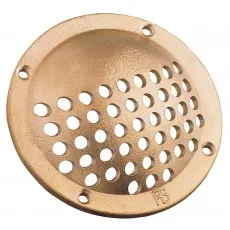
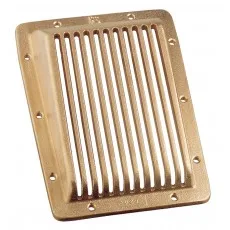
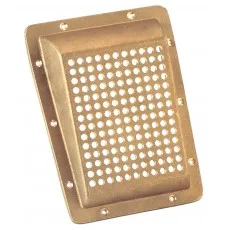
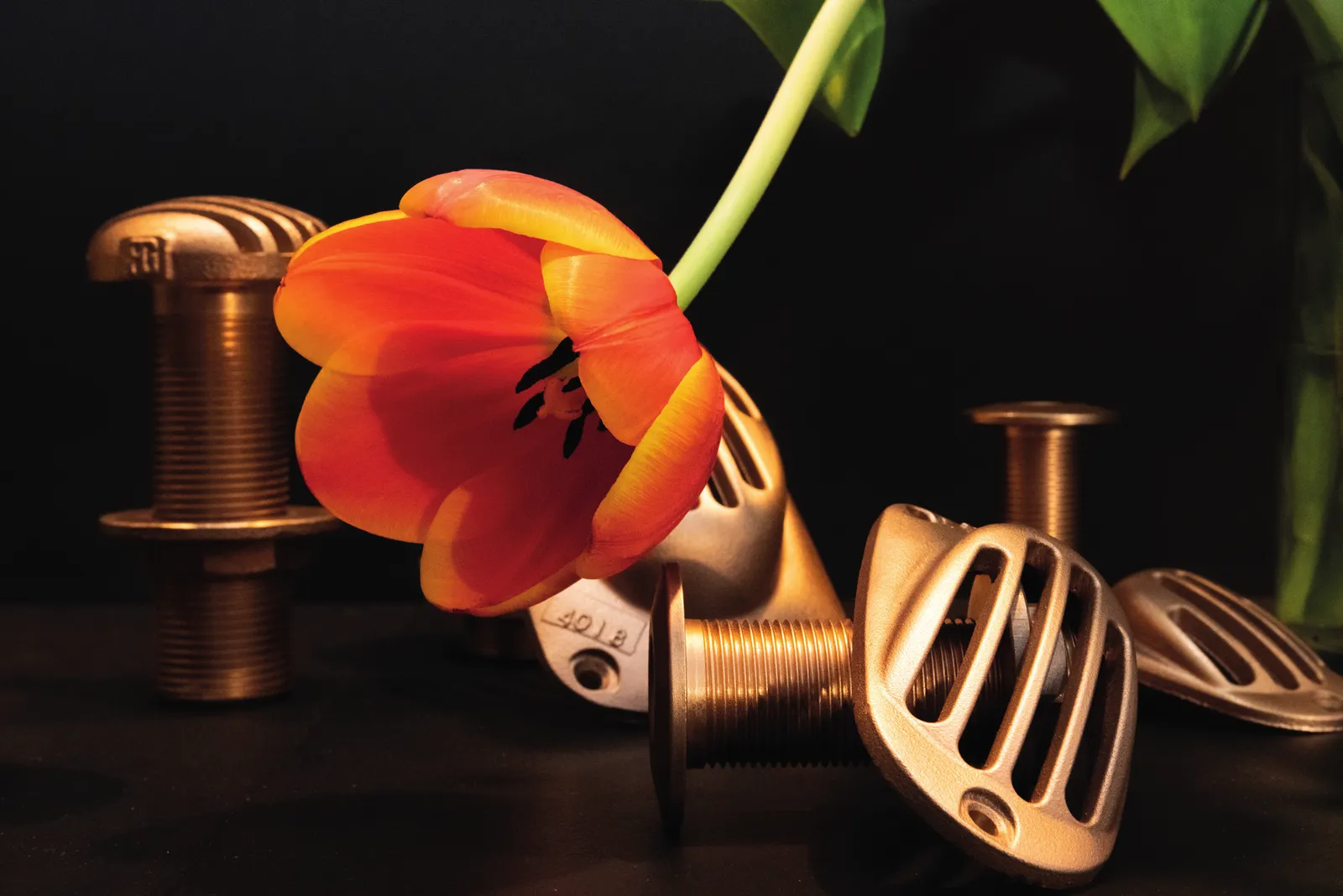
See all our scoop strainers and through-hulls.
Which size?
The size depends on the circuit, the engines and the number of systems supplied. Every circuit has head losses, which should be kept as low as possible; but since a Guidi intake is full bore, there is no need to oversize it, unless the circuit splits the incoming water differently. Threads are parallel BSP (BSPP, British Standard Pipe).
Approval
The 1260 and 1260A through-hulls are RINA (Registro Italiano Navale) approved and comply with UNI EN ISO 9093-1. A RINA statement (201800693) also covers several other Guidi items intended for pleasure boats under 24 m, including the anti-blocking valves. If your boat requires an approval, ask us for the documents available for the chosen reference.
Installation
The intake is fitted in the hull hole and secured with a nut and washer. In the Guidi System, it is followed by the anti-blocking valve and then the strainer: see our articles on the Guidi System C-PIN, anti-blocking valves and the Mediterraneo strainer.
Galvanic protection: the 1145 bonding washer
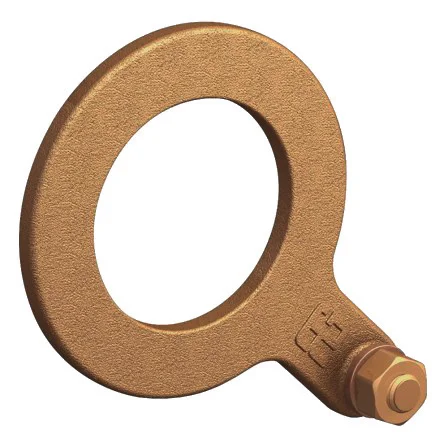
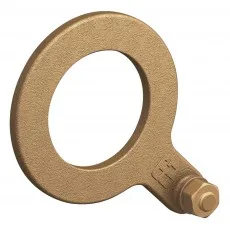
If the yard and the design allow it, it is always better to protect the intake against galvanic currents. Guidi also offers the 1145 washer in sandblasted brass, fitted with a lug that connects the bonding cable to the bolt.
Maintenance
Regular cleaning and checks are recommended: the grille must stay clear. Marine fouling is not the only culprit; litter and plastics carried by the sea can also block it. An encrusted intake can be cleaned with a brush or a high-pressure water jet. An antifouling system fitted in the strainer also helps keep the intakes clean: with the boat at rest, it limits deposits in the circuit downstream of the strainer. According to Guidi, a little dirt on the grille does not reduce flow, but regular checks remain the best guarantee. Nuts and washers are available separately.
Finally, these intakes are built to last, need very little maintenance and are fully recyclable.
Frequently asked questions
What is the difference between a seawater intake and a scoop strainer?
An intake is one piece: a grille head and a threaded body that passes through the hull. A scoop strainer is the older form, with a grille head. The Manta 1261 scoop is the exception: fixed to the hull with a separate through-hull, it can be removed for cleaning.
Slotted or perforated grille?
Slotted grilles suit common uses and, fully slotted, the heads. Perforated heads (1115, 1117, 1119) are better in very muddy waters.
Should the intake be oversized?
No: a Guidi intake is full bore, with a flow area through the head larger than the bore of the threaded body. Choose it according to the circuit, the engines and the number of systems supplied.
Bronze or brass for an intake?
Bronze resists corrosion best and allows an all-bronze circuit. Brass suits less corrosive environments or ones well protected against galvanic currents.
How do I bond the intake?
With the Guidi 1145 washer, fitted with a lug that connects the bonding cable to the intake bolt, if the boat's design provides for it.
Find out more
Browse all Guidi products at RPM Diffusion and the manufacturer's page: Prese a mare e cuffie (guidisrl.it). To choose the right model or size, call us on +33 4 22 32 91 88 or email contact@rpmdiffusion.com.